Relational Education
The Relational Education Vision
We consider it a sacred honor to walk alongside families as we help facilitate educational journeys that are deeply relational, intellectually rigorous, and marked by a spirit of rest. Above all, we seek the deepest communion with Jesus Christ—cultivating lives that become dwelling places for the Holy Spirit—because those who are joined to the Lord are one with Him. As Jesus declares, “At that day you will know that I am in My Father, and you in Me, and I in you” (John 14:20).
As teachers and leaders, we behold each student as one made in the image of God. We believe education should flow from and reflect this holy image, offering a generous feast of living ideas that nourish both heart and mind in Christ. Rooted in truth, beauty, and goodness, and anchored in this vision, we offer the following subjects to our students:
Spiritual formation — Bible and church history — ancient, world, U.S., and national history — geography and cartography — citizenship and ethics — the reading of living books, literature and poetry — writing, narration, and oratory — English grammar and language studies — music history and composers — art appreciation and architecture — advanced nature studies — and general mathematics sciences.
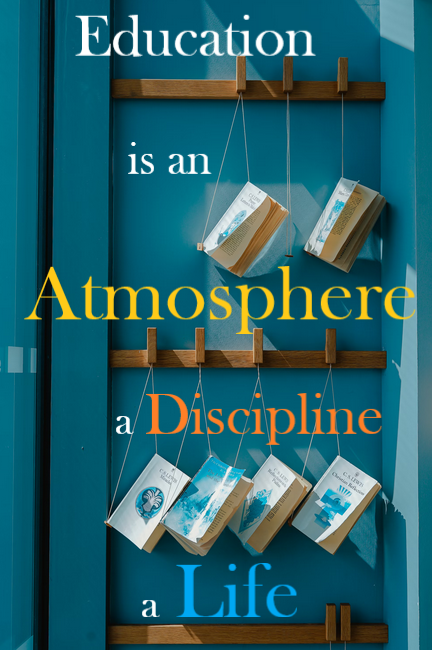
Charlotte Mason famously stated, “Education is an atmosphere, a discipline, a life.” When we speak of education as an atmosphere, we refer to a thoughtfully prepared environment where living ideas are presented in ways that shape the student’s character and intellect for good. Students learn most fruitfully when they are immersed in settings that are restful, familiar, and aesthetically beautiful—spaces that foster peace, attentiveness, and a freedom to learn in community, unhindered and receptive to the presence of God.
To say that education is a discipline is to affirm the careful formation of habits—habits of both body and mind—established deliberately and with care. Physiologists remind us that habits are formed as the brain adapts to repeated patterns of thought and action. Through consistent practice, these habits become the scaffolding upon which attention, self-government, and intellectual virtue are built.
Finally, when we say education is a life, we acknowledge the learner’s need for ongoing physical, moral, and intellectual nourishment. The mind feeds upon ideas, and it is our joyful responsibility as hosts, mentors, and teachers to spread a generous feast of living books, rich curriculum, and worthy ideas—sustenance intended not merely for the classroom, but for a lifetime of growth.
These three foundations—atmosphere, discipline, and life—are essential to a sound education. They are Charlotte Mason’s timeless principles, which we are honored to uphold for every student entrusted to our care.
We hold that the child's mind is no mere sac to hold ideas; rather, if the figure may be allowed, a spiritual organism, with an appetite for all knowledge. This is its proper diet, with which it is prepared to deal; and which it can digest and assimilate as the body does foodstuffs.
Charlotte Mason, 1925
The Charlotte Mason Heart
Charlotte Mason was a Christian educator whose work profoundly shaped the landscape of children’s education in her own time and continues to influence it today. Her philosophy of education is most clearly expressed through two guiding convictions she held throughout her life: “Education is an atmosphere, a discipline, a life,” and “Education is the science of relations.”
Mason placed great importance on the reading of excellent literature and coined the term living books to describe works written by authors who knew and loved their subject and could awaken the imagination of the child through rich ideas rather than dry facts. Above all, Mason regarded the Word of God as the greatest living book given to mankind.
At the heart of Mason’s philosophy was her unwavering belief that children are born persons—created in the image of God—and deserving of deep respect. She recognized in children a natural appetite for learning and developed educational practices that nourish healthy intellectual, emotional, spiritual, and physical growth through carefully prepared learning environments. Mason believed children should feast upon the very best ideas—what she called mind food—and that even the youngest learners ought to be offered “ideas, clothed upon with facts,” presented with beauty and vitality. In this way, history becomes alive, imagination is cultivated, and the mind is trained to delight in truth.
Her approach to education is distinctly child-centered, relational, and ultimately propelled by the love of Christ.
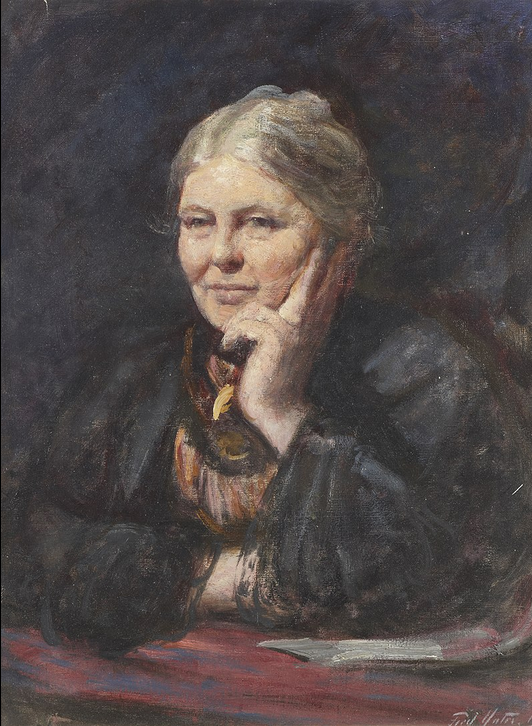
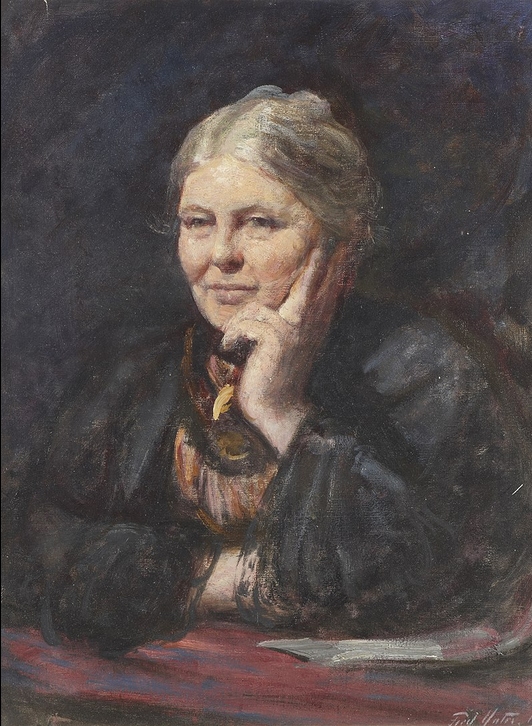
Charlotte Mason – painted in 1902 by Frederic Yates, courtesy Wikipedia.

Charlotte Mason House of Education, Ambleside England
Empowerment Scholarship Account (ESA) Funding
Hearthside Academy (formerly Solus Christus Classical Academy) is an approved vendor for the Arizona Department of Education’s Empowerment Scholarship Account (ESA). Empowerment Scholarships expand educational opportunities for eligible students outside of the public school system, provides funding that can be used for a wide variety of educational expenses, and pays for private school tuition, educational therapies, tutoring, and more. Families interested in this funding are encouraged to apply directly at the Arizona Department of Education ESA homepage.